A Career in Geology — An Interview with Susan Strowbridge
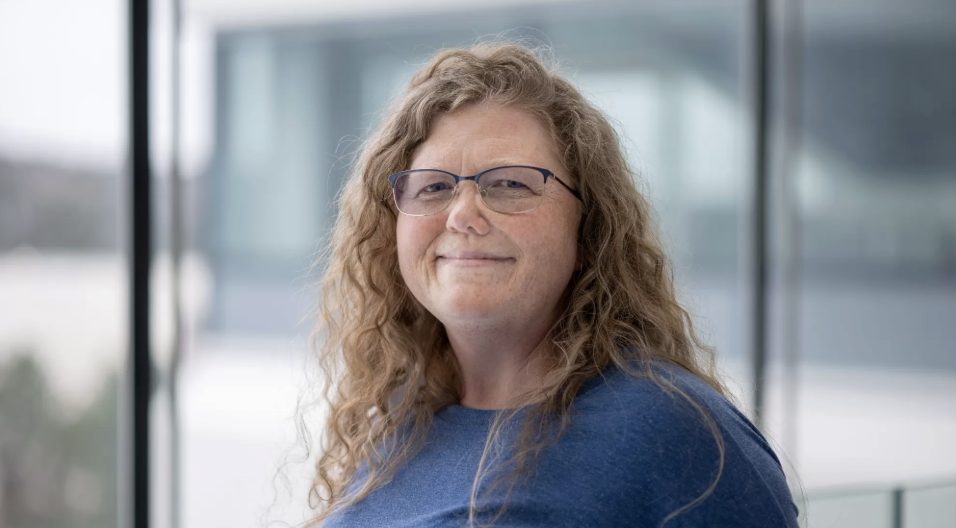
Photo of Susan Strowbridge. Image sourced from the Memorial University website.
What is your job and what does it entail?
I am an instructional assistant in the Department of Earth Sciences. My job breaks down into several different components: 1) maintaining the department’s specimen and thin section collections for 2nd, 3rd, and 4th year courses, 2) preparing lab materials for and aiding in the instruction of courses above first year, 3) care and maintenance of the department’s microscope collections, 4) other related duties.
When did you start becoming interested in pursuing this career path?
I became interested in becoming a geologist when we covered the rock cycle in my grade 10 geography class. I had no idea what I was intending to do with a degree in geology, but I knew that I wanted to spend my life studying rocks. After I finished my undergraduate degree, I applied to do my Masters here at MUN and after completing that I was lucky and stumbled into the job I currently have. When I was introduced to this job I knew that teaching others about geology and geological processes was what I wanted to do for the rest of my career.
What has been your most influential “success” factor?
If I understand the question correctly, I would have to say my most influential success factor has been the faculty, staff and students that make up the Department of Earth Sciences. They are the people that make my work enjoyable, that make me excited to come to work everyday and that bring out my passion for this science.
What was the biggest challenge you’ve faced in your career thus far?
It would have to be staying positive and upbeat despite all of the negative energy and uncertainty surrounding the operational functionality of the University in its current phase.
What makes you passionate about your career?
I absolutely love my job. For the most part I enjoy all aspects of it. However, what brings out my most passionate side is being in the lab (or in the field) with students. Teaching young beginner geologists all the cool things I know about rock and earth systems or joining them in the adventure of learning something new brings me joy and gives me a sense of elation like nothing else I have ever experienced.
What do you like to do in your spare time?
I have a variety of hobbies but the one my spouse will tell you makes me light up is being out and about in nature and (geek alert!) looking at the geology in the places we vacation.
What part of your academic career did you enjoy the most?
That would have to be the collection and analysis of the data. It is like putting the pieces of a puzzle together to tell the story of the history of the rock units in the study area.
How has your experience working in labs influenced your approach to your PhD?
Working in labs has taught me the importance of time management and of focusing on the goals I am trying to reach. It has also taught me the value of using clear and concise language when I am trying to explain things to others.
How has your previous work or life experience influenced the way you approach your studies or research now?
Before starting here at the University I had worked at least 5 other jobs (some minimum wage, some not) and I had worked with a yaffle of people from all stages of life. What all of this taught me was: my emergency is not someone else’s and therefore I am the one responsible for all outcomes in my studies. Also, the outcomes of my research would only be as good as the efforts I put into them.
What advice would you give to other young women hoping to pursue a path similar to yours?
If this is the path you want to take then own it. Make your choices in life with your end-goals in mind. Don’t let anyone sway your decisions. And always take responsibility for the mistakes you make along the way because there will be mistakes and that is O.K. Mistakes are how we learn and how we grow.